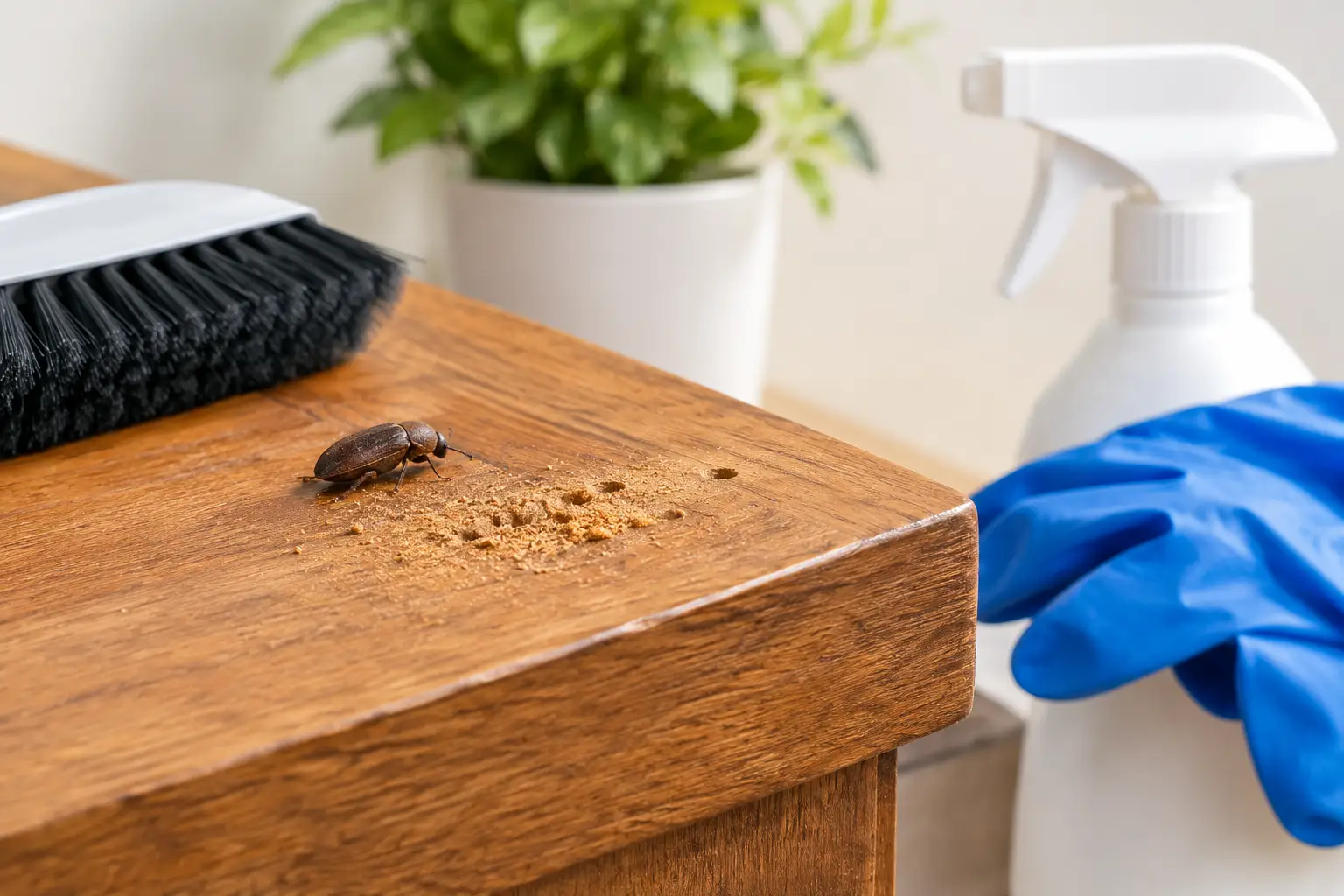
How to Remove Powderpost Beetles Safely at Home
Fresh, flour-like dust beneath a hardwood floor, cabinet, beam, or piece of furniture is easy to overlook. But when it keeps appearing, it may be time to remove powderpost beetles safely before larvae continue feeding inside the wood. The key is knowing whether the infestation is active, protecting people and pets during treatment, and choosing a method that reaches the beetles where they actually live.
Powderpost beetles are wood-boring insects whose larvae feed inside wood for months or even years. Adult beetles emerge through tiny holes, leaving behind fine powder known as frass. They can affect hardwood flooring, trim, furniture, framing, stored lumber, and other unfinished or lightly finished wood. In Central Arkansas, warm weather and damp conditions can make suitable wood more inviting, especially where moisture problems go unaddressed.
Start by Confirming Active Powderpost Beetles
An exit hole alone does not prove you have a current beetle problem. A piece of old furniture or reclaimed wood may have holes from a long-resolved infestation. Before spending money or applying any product, look for signs that activity is happening now.
Fresh frass is the strongest clue. It is usually light-colored, very fine, and may sift from holes after the wood is tapped or moved. New holes with sharp, clean edges also deserve attention. If you clean the dust away and it returns over the next few weeks or months, there is likely active activity inside the wood.
The holes can help identify the general type of wood-boring beetle, but they do not tell the whole story. Powderpost beetle holes are commonly small and round, while other wood pests can leave different evidence. Termites, carpenter ants, and wood-decay fungi can also affect structural wood, so a professional inspection is often the fastest way to avoid treating the wrong problem.
Why Safe Removal Requires More Than Spraying
The adult beetles you see are only a small part of the problem. Most of the damage occurs when larvae are hidden deep inside the wood. A general household bug spray may kill an adult crawling nearby, but it will not reliably reach larvae already feeding below the surface.
There is also a safety issue. Applying insecticides heavily indoors, especially to flooring, furniture, cabinets, or exposed framing, can create unnecessary exposure for children, pets, and anyone with respiratory sensitivities. Treating more product as the answer can also stain finishes, damage materials, or fail because the product cannot penetrate sealed wood.
Safe removal means matching the treatment to the wood, the infestation level, and the location. A small issue in one unfinished item is very different from widespread activity in structural timbers, hardwood floors, or a commercial building.
How to Remove Powderpost Beetles Safely
Isolate and inspect affected items
If the problem appears limited to a movable item, such as unfinished furniture, a woodcraft project, or stored lumber, move it away from other wood products if practical. Avoid dragging it through the home or placing it in an unfinished garage full of lumber. Vacuum loose frass using a crevice tool, then empty the vacuum outdoors.
Take pictures of the holes and dust before cleaning. This gives you a useful record if more frass appears later and helps a pest professional determine whether activity is continuing.
Correct moisture conditions around the wood
Many powderpost beetles are more likely to develop in wood with elevated moisture. That does not mean every infestation is caused by a leak, but moisture control is an essential part of long-term prevention. Repair plumbing leaks, roof leaks, and drainage problems. Use ventilation or a dehumidifier where needed, particularly in crawl spaces, basements, workshops, and storage areas.
For structural wood, moisture control can matter as much as the insect treatment. If a crawl space stays damp, replacing damaged lumber without correcting the conditions can leave the new material vulnerable later.
Use only wood-appropriate products
Borate-based wood treatments can be useful on bare, unfinished, absorbent wood. They work by soaking into the wood fibers, where larvae may encounter the treatment as they feed. They are not a universal fix. Paint, stain, varnish, sealers, and dense wood can limit penetration, and a surface application will not solve every established infestation.
Always follow the product label exactly. Wear the listed protective equipment, keep children and pets out of the treatment area until it is safe to return, and never apply more than the label allows. Do not mix products or use a pesticide in a way the label does not approve.
For valuable furniture, antiques, finished floors, or occupied living spaces, do not experiment with broad pesticide applications. The risk of damaging the item or creating an indoor exposure issue is rarely worth it.
Consider non-chemical treatment for small items
Some small, movable wood items can be treated with controlled heat or, in certain cases, freezing. These methods must bring the entire item to a lethal temperature for the necessary amount of time. That is harder than it sounds because thick wood, joints, and insulated areas do not change temperature evenly.
Heat can crack, warp, loosen glue, or damage finishes if it is not carefully controlled. Freezing may not be suitable for every species or item, particularly delicate antiques. For anything valuable, ask a qualified pest professional or restoration specialist before choosing a treatment.
Call a professional for structural or widespread activity
Professional service is the safest choice when frass is appearing in floor joists, subflooring, beams, trim, cabinets, hardwood floors, wall framing, or multiple areas of the building. It is also the right call when you cannot tell whether you are dealing with powderpost beetles, termites, or another wood-destroying pest.
A trained technician can inspect the full extent of the issue, assess moisture conditions, identify likely access points, and recommend a targeted treatment plan. Depending on the situation, that may involve localized wood treatment, injection into accessible galleries, treatment of exposed structural wood, or another approach suited to the property. Severe or complex infestations may require more specialized options.
What Not to Do
Avoid sealing fresh exit holes before you know the infestation is inactive. Sealing does not kill larvae in the wood, and it can make future monitoring more difficult. Do not rely on paint or stain alone to stop an active infestation either. A finish may reduce future egg-laying on suitable wood, but it does not reliably eliminate larvae already inside.
Do not bring untreated reclaimed lumber, firewood, or secondhand unfinished furniture into the house without checking it. This is especially relevant for workshops, rental properties, and businesses that store wood materials. Keep stored lumber dry, off the ground, and covered in a way that allows airflow.
Finally, do not assume every small hole means powderpost beetles. Misidentification can lead to a false sense of security when a more serious wood-destroying pest is present.
Preventing Powderpost Beetles After Treatment
After treatment, monitoring matters. Vacuum remaining frass, mark or photograph suspect holes, and check the area periodically for new dust or newly formed exit holes. Keep humidity under control and address leaks promptly. Where practical, seal or finish new wood once it is fully dry and appropriate for finishing.
Property managers and business owners should include wood storage areas, maintenance rooms, crawl spaces, and older wood fixtures in routine inspections. Homeowners should pay close attention after renovations, plumbing repairs, roof leaks, or bringing unfinished wood products indoors.
When an Inspection Is Worth It
A professional inspection is worth scheduling when evidence keeps returning, the wood is structural, there are signs in more than one room, or the affected material has value you do not want to risk. It is also a smart step if you are buying a home with older hardwoods, exposed beams, or a damp crawl space.
Bug Pro LLC helps homeowners and businesses across Central Arkansas identify wood-destroying pest activity and choose practical, safe next steps. An inspection can replace guesswork with a clear answer about what is damaging the wood, how active the problem is, and what treatment makes sense for the property.
Fresh powder beneath a piece of wood is a small sign that deserves timely attention. Acting early, controlling moisture, and getting qualified help for structural concerns can protect both your woodwork and your peace of mind.


