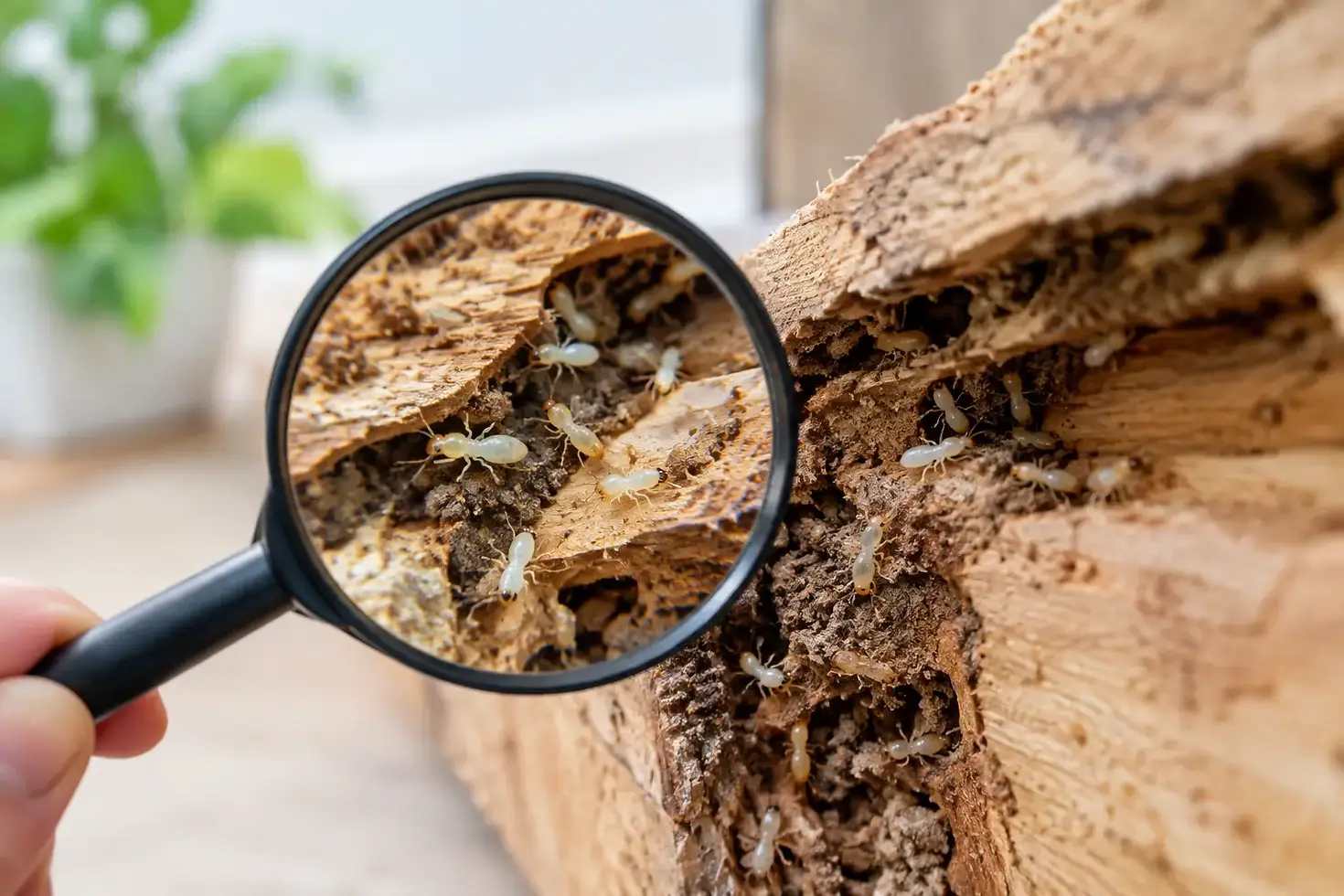
Do Termites Bite? What Arkansas Owners Should Know
A termite can bite, but it is not looking for you. When people ask, “do termites bite,” they are usually worried about a painful pest problem in the home or a risk to children and pets. The bigger concern is usually hidden behind the question: termites can cause serious damage long before anyone notices them.
Most termites avoid people. They live in dark, moist areas and spend their time feeding on cellulose-based materials, especially wood. If a termite does bite, it is generally a defensive reaction from a soldier termite that has been handled, disturbed, or trapped against skin. It is not the kind of pest behavior that leads to repeated bites around your home.
Do Termites Bite People or Pets?
Technically, yes. Soldier termites have strong jaws designed to defend the colony against ants and other threats. A very small number of species may pinch if they are directly handled. However, termite bites on people are uncommon, typically mild, and not considered medically significant for most people.
Worker termites, which make up most of the termites in a colony, do not have the large defensive jaws associated with soldiers. Their job is to gather food, care for the colony, and keep tunnels moving through wood and soil. They are not interested in biting humans, pets, furniture fabric, or stored food.
A termite does not seek out blood meals the way mosquitoes, fleas, bed bugs, or ticks do. It does not live in bedding or on animals, and it does not infest a person. If you have unexplained itchy welts, bites after sleeping, or pets that are scratching, another pest is much more likely to be responsible.
What Does a Termite Bite Look and Feel Like?
If a soldier termite pinches skin, you may feel a tiny, brief pinch. There may be a small red spot or minor irritation, but many people would not notice the contact at all. Termites are small, and their bite is not usually capable of breaking through healthy skin in a meaningful way.
The reaction depends on the person and the circumstances. Someone with sensitive skin may notice localized redness or itching. Wash the area with soap and water and avoid scratching it. If there is swelling, pain that worsens, signs of infection, or a severe allergic reaction, seek medical advice. Those reactions would be unusual, but it is always reasonable to take skin symptoms seriously.
Termites are not known for spreading disease to people through bites. That separates them from pests such as mosquitoes and ticks, which can create genuine health concerns in Arkansas. Termites are primarily a property threat, not a personal health threat.
Do Flying Termites Bite?
Flying termites, often called swarmers, are reproductive termites that leave an established colony to begin new ones. They can be alarming when they appear near windows, lights, or doors in spring, especially after warm rain. But swarmers are not aggressive and do not bite people as they fly around.
A swarm inside your house does not mean the insects are attacking you. It may mean there is an active colony in or near the structure, though, and that deserves prompt attention. Homeowners also often mistake flying ants for termite swarmers. Both have wings, but termites have straight antennae, a broad waist, and four wings of similar size. Flying ants have elbowed antennae, a pinched waist, and front wings that are longer than the back pair.
Why Termite Activity Matters More Than a Bite
The concerning part of finding termites is not whether one can pinch you. It is what the colony may be doing where you cannot see it. Subterranean termites, the termites most often associated with structural damage in Arkansas, travel through soil and protected mud tubes to reach wood in a building.
They can feed inside wall voids, around support areas, beneath floors, near windows, and in other hidden spaces. By the time wood feels soft, sounds hollow, or shows visible damage, the colony may have been active for some time. A home can still look perfectly normal on the surface while termites are feeding behind drywall or beneath flooring.
Termite damage is often mistaken for moisture damage, rot, or normal settling. Doors may stick, baseboards may appear damaged, paint may bubble, or trim may sound hollow when tapped. None of those signs prove termites on their own, but they are good reasons to schedule a professional inspection.
Common Signs to Watch For
A few signs are especially worth acting on. Mud tubes running along a foundation, crawlspace wall, plumbing penetration, or exterior wall are a major warning sign. These pencil-sized tunnels help subterranean termites maintain moisture and travel safely between the soil and a food source.
Discarded wings near windowsills, light fixtures, or doors can point to a termite swarm. Small piles of pellet-like material may indicate drywood termites or another wood-destroying insect, although drywood termites are less common in many parts of Central Arkansas than subterranean termites. Damaged wood, blistering paint, and soft spots near moisture-prone areas should also be checked.
Do not rely on a single sign, though. Some active infestations produce very little visible evidence. That is why routine inspections are often the most practical way to catch a problem before repairs become expensive.
What to Do If You Find Termites
Try not to spray visible termites with a store-bought insecticide and assume the problem is solved. Killing a few termites on the surface does not eliminate the colony, and disturbing their activity can make it harder to determine where they are entering the building. The same goes for knocking down mud tubes without having the area inspected.
Instead, take a clear photo if you can do so safely. Note where you saw the insects, wings, tubes, or damage, and avoid moving any affected wood or soil. Then schedule a termite inspection. A trained technician can identify whether you are dealing with termites, carpenter ants, powderpost beetles, moisture damage, or another issue that needs a different treatment approach.
Treatment is not one-size-fits-all. The right plan depends on the construction of the property, the location of activity, soil conditions, moisture concerns, and whether there is a current infestation or a need for ongoing prevention. A quality termite program should address the colony risk around the structure, not just the spot where termites were seen.
Reduce the Conditions Termites Like
Professional treatment is the key step when termites are active, but property maintenance can reduce conditions that attract them. Termites need moisture, shelter, and access to wood. Keeping these conditions under control makes a difference over time.
Keep firewood, lumber, cardboard, and wood debris away from the foundation. Make sure gutters and downspouts move water away from the house, and repair leaks around plumbing, roofs, and exterior walls. Avoid allowing mulch to pile directly against siding or cover foundation vents. In crawlspaces, excess moisture and poor ventilation can create conditions that support termite activity and wood decay.
These steps lower risk, but they are not a replacement for inspection or treatment. Termites can enter through gaps as small as a fraction of an inch and travel underground without ever being seen outside.
When to Call a Local Termite Professional
Call for an inspection when you see swarmers indoors, find mud tubes, notice unexplained wood damage, or are buying or managing a property with an unknown termite history. It is also smart to act if a neighbor has confirmed termite activity. Colonies do not stay neatly inside one property line.
For homeowners and business owners across Central Arkansas, Bug Pro LLC provides practical termite inspections, treatment options, and ongoing protection designed for local conditions. A prompt inspection can replace guesswork with a clear answer and help protect the part of your property termites actually want: the structure itself.
If you have seen possible termite activity, leave the pest identification and treatment decisions to a qualified professional. A small insect near a window may be harmless, but a hidden termite colony is never something to put off until next season.


