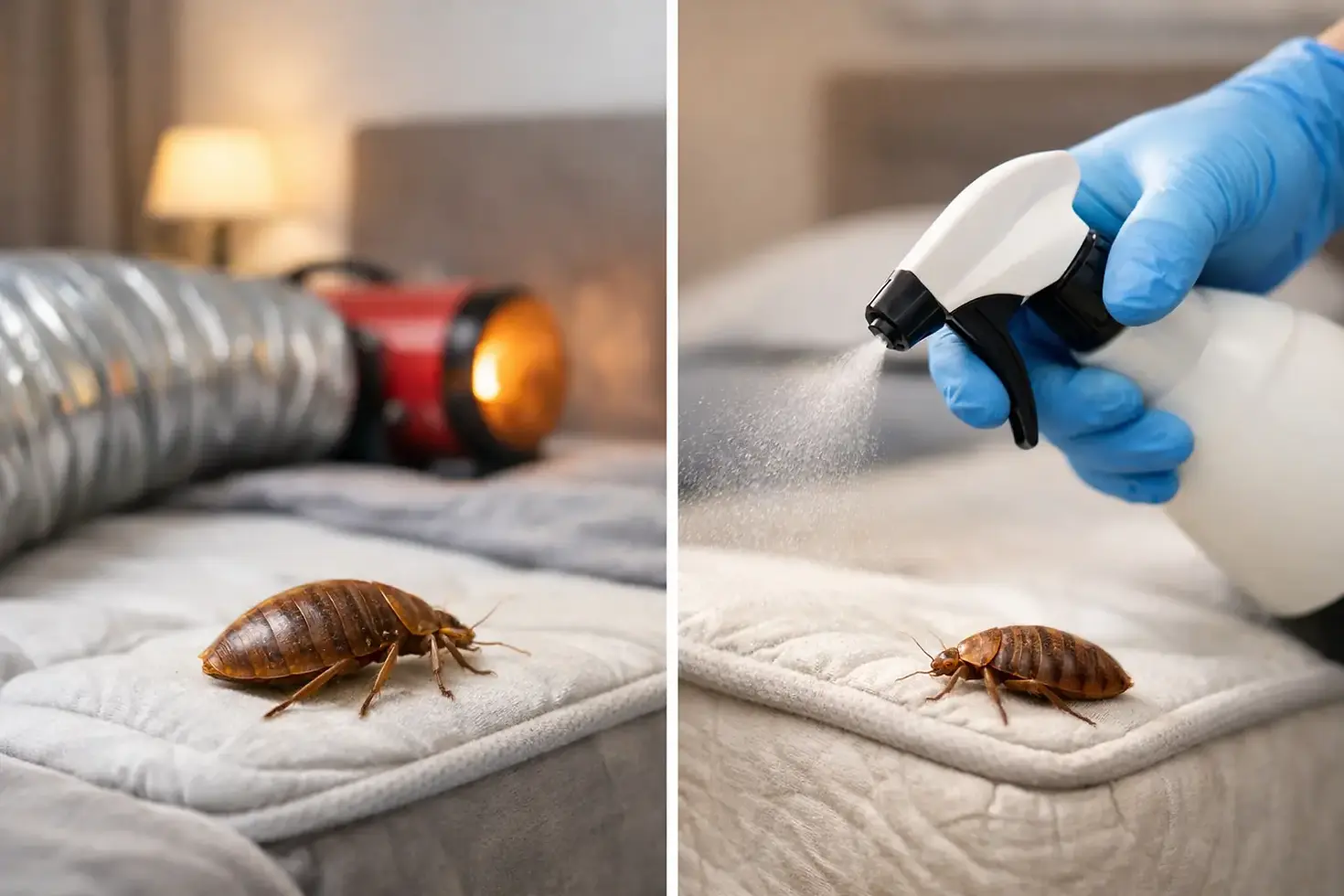
Bed Bug Heat Treatment Versus Spray
- Jun 25
- 6 min read
You usually find bed bugs at the worst possible time - after a bad night of sleep, right before guests arrive, or when bites keep showing up and you still cannot prove where they are hiding. When people start comparing bed bug heat treatment versus spray, they are usually not asking out of curiosity. They want the problem gone, and they want to make the right call the first time.
The hard truth is that both methods can work, but they do different jobs. Heat treatment is known for speed and whole-room reach. Spray treatment is often more targeted and may cost less upfront. The better option depends on how widespread the infestation is, how quickly you need results, what items are affected, and whether you are dealing with an active outbreak or trying to stop bed bugs from coming back.
Bed bug heat treatment versus spray: the basic difference
Heat treatment raises the temperature in infested areas to a level that bed bugs cannot survive. That includes adults, nymphs, and eggs when the treatment is done correctly. Specialized equipment heats rooms, and technicians monitor temperatures closely to make sure heat reaches hiding spots in furniture, baseboards, wall voids, and other hard-to-reach areas.
Spray treatment uses professional products applied to key areas where bed bugs travel and hide. This can include bed frames, cracks, crevices, furniture joints, baseboards, and nearby surfaces. Some products kill on contact, while others leave a residual that continues working after the application.
That difference matters. Heat is designed to deliver a broad knockdown in a short window. Spray is often part of a more extended treatment plan that may require follow-up visits.
When heat treatment makes the most sense
Heat treatment is often the better fit when an infestation is spread through multiple rooms or when bed bugs are deeply established in furniture and cluttered spaces. Because heat moves into places sprays may not fully reach, it can be very effective for severe infestations.
Another major advantage is speed. In many cases, a properly performed heat treatment can reduce the infestation dramatically in a single service. That is a big deal for homeowners who need fast relief or property managers who need to turn a unit around quickly.
Heat also treats eggs well, which is one of the toughest parts of bed bug control. Eggs can survive some treatment gaps that leave people dealing with a new wave of activity days later. Heat helps reduce that risk when the treatment reaches the right temperatures throughout the space.
Still, heat is not magic. If a room is packed with belongings, if heat-sensitive items are not handled properly, or if cooler spots remain during treatment, bed bugs can survive. That is why setup and technician experience matter so much.
When spray treatment makes the most sense
Spray treatment can be a practical choice when the infestation is more limited or when a property needs a targeted approach. If bed bugs appear to be concentrated in one room or around one sleeping area, a professional spray program may be enough to control the issue.
Sprays also bring something heat does not - residual protection. Once the heat treatment is over, the heat is gone. A residual product, when used correctly, can keep working in treated areas and help catch bed bugs that emerge later or move across treated surfaces.
This is one reason spray programs are often used as part of ongoing bed bug control. They can be useful in apartments, hotels, offices, and homes where monitoring and follow-up are just as important as the first treatment.
The trade-off is time. Spray treatment often takes more than one visit, and success depends heavily on where products are applied, how much clutter is present, and whether residents follow prep instructions carefully. Bed bugs are good at hiding. Miss enough hiding places, and the problem drags on.
Cost, speed, and disruption
For many Arkansas property owners, the real question in bed bug heat treatment versus spray is not which one sounds stronger. It is which one fits their budget and daily routine without creating more headaches.
Heat treatment usually costs more upfront. It requires specialized equipment, close monitoring, and substantial prep. You may need to remove certain items, plan to be out of the property during service, and follow detailed instructions before technicians arrive.
Spray treatment is often less expensive at the start, but total cost can rise if multiple visits are needed. That does not mean spray is the wrong choice. In some cases, a lower-cost, targeted treatment is exactly what is needed. But if repeated treatments stretch over weeks, the savings may not be as large as they first appear.
Disruption matters too. Heat can be more intense for one day. Spray treatment can be less disruptive per visit, but the process may last longer overall. Some customers would rather handle one major service and be done. Others prefer a phased treatment plan.
Safety and household concerns
Both methods can be safe when handled by trained professionals, but they involve different kinds of precautions.
With heat treatment, the main concern is protecting heat-sensitive items. Electronics, medications, candles, aerosol cans, certain plastics, and other belongings may need to be removed or managed before service. A qualified provider will explain exactly what needs attention.
With spray treatment, product selection and application matter. Professional bed bug materials are not the same as over-the-counter products, and proper placement is critical. More is not better. The goal is to apply the right products in the right areas, not to soak every surface.
For families with children, pets, or special health concerns, the best move is to talk through those details before treatment starts. A good pest professional will explain the plan in plain language and tell you what to expect before reentry.
Why some infestations need both
In real-world pest control, bed bug heat treatment versus spray is not always an either-or decision. Some of the best results come from using both methods in the right sequence.
For example, heat may be used to knock down a heavy infestation quickly, while targeted residual applications help guard against survivors in select areas. In other cases, sprays may be used after inspection reveals a smaller, localized problem that still needs monitoring and follow-up.
This combined approach can be especially useful in apartment settings, multi-room homes, and commercial spaces where bed bugs may move between units or hide in difficult structural areas. It is also helpful when the infestation has gone on long enough that simple treatment is no longer enough.
What matters more than the method
Homeowners often focus on the treatment type, but the bigger issue is whether the company identifies the infestation correctly and treats the full problem. A weak inspection can ruin either method.
Bed bugs hide in mattress seams, box springs, headboards, upholstered furniture, wall joints, luggage, and tiny cracks near sleeping or resting areas. If the inspection misses active zones, treatment may only hit part of the population.
Preparation matters just as much. Washing linens, reducing clutter, bagging items properly, and following post-treatment instructions can make a major difference. So can avoiding DIY sprays and foggers before professional service. Those products often scatter bed bugs and make the infestation harder to control.
In Central Arkansas, where families and property managers want fast answers and clear service, the best pest company is the one that explains what it found, why it recommends a certain method, and what happens if bed bug activity continues. That practical guidance is often worth more than a long list of technical claims.
How to choose the right option for your property
If you want the shortest path to broad control and the infestation is widespread, heat treatment may be the stronger choice. If the problem looks isolated, your budget is tighter, or you want residual protection built into the plan, spray treatment may make more sense.
If you are not sure how large the infestation really is, that uncertainty is a sign to schedule an inspection instead of guessing. Bed bugs rarely stay where you first notice them. What seems like a small problem in one bedroom can turn out to involve nearby furniture, adjoining rooms, or shared walls.
A local company like Bug Pro LLC can help property owners weigh those trade-offs based on the actual layout, severity, and use of the space. That matters more than picking a method from a general internet search.
The right treatment is the one that matches the infestation you actually have, not the one that sounds best on paper. When bed bugs are involved, quick action and a solid inspection usually save more time, stress, and money than waiting for the problem to prove itself.


