How to Prevent Ants Indoors for Good
- Jun 19
- 6 min read
You usually do not see the first ant. You see the line. One ant on the counter turns into a trail by the sink, a few more near the pantry, and suddenly your kitchen feels like it belongs to them. If you are wondering how to prevent ants indoors, the best answer is not one trick or one spray. It is a combination of cleanup, exclusion, moisture control, and knowing when a recurring problem needs professional treatment.
Ants are persistent because your home gives them exactly what they want - food, water, and shelter. Once a scout ant finds a reliable source, it leaves a scent trail for the rest of the colony. That is why wiping up visible ants without addressing the reason they are there usually does not solve much for long.
How to Prevent Ants Indoors Starts With the Attractants
Most indoor ant problems begin in kitchens, bathrooms, laundry rooms, and around pet feeding areas. These spaces offer crumbs, sticky residue, standing water, and small cracks that are easy for ants to use. Prevention starts by making those areas less rewarding.
Food is the obvious issue, but not always in the way people think. A bag of sugar left open matters, of course, but so does the light syrup ring under a bottle, the grease along a backsplash, or the snack crumbs under a toaster. Ants do not need much. A tiny, repeated food source can keep them coming back.
Store dry goods in sealed containers when possible. Wipe counters daily, including corners and seams where crumbs collect. Sweep and vacuum more often than usual during ant season, especially around baseboards, under appliances, and beneath the dining table. If you keep fruit on the counter, check it often. Overripe produce can attract ants fast.
Pet food is another common trigger. If bowls stay down all day, ants may find them before you do. Feeding pets on a schedule and cleaning up leftover food can make a real difference. Water bowls can also attract ants, especially during hot Arkansas weather when outdoor moisture is limited.
Moisture Problems Matter More Than Many Homeowners Expect
Not all ants come inside looking for sweets. Some are driven by moisture, especially when conditions outside are dry or when there is a leak indoors. That is why ant activity often shows up around bathroom sinks, tubs, dishwashers, water heaters, and utility rooms.
If you want to know how to prevent ants indoors over the long term, check for moisture issues as carefully as you check for crumbs. A slow drip under the sink, condensation around plumbing, or damp wood near a window can invite more than ants. These conditions can also support other pest problems.
Fix leaks promptly. Dry out wet cabinets. Use exhaust fans where humidity builds up. Make sure gutters and downspouts move water away from the foundation instead of letting it collect near the house. In some homes, crawl space or ventilation issues can keep moisture levels higher than they should be, which creates ongoing conditions pests like.
Seal the Gaps That Let Ants In
Ants do not need a large opening to get indoors. Small cracks around windows, utility penetrations, door thresholds, and foundation joints can be enough. They also travel along tree limbs, shrubs, and exterior walls, then enter wherever they find a gap.
Walk the outside of your home and look closely at the lower walls, door frames, and window edges. Indoors, pay attention to where ants are trailing. If you repeatedly see them near the same baseboard, windowsill, or cabinet corner, there is a good chance an entry point is nearby.
Caulk cracks around windows and trim. Add weatherstripping where doors do not seal tightly. Repair damaged screens. Seal openings around pipes and wires where they pass into the building. These are simple steps, but they matter because prevention gets easier when fewer ants can enter in the first place.
There is a trade-off here. Sealing helps, but it rarely fixes a full ant problem by itself if a colony is already established nearby. Think of exclusion as one part of the job, not the whole job.
Why Spraying Randomly Often Backfires
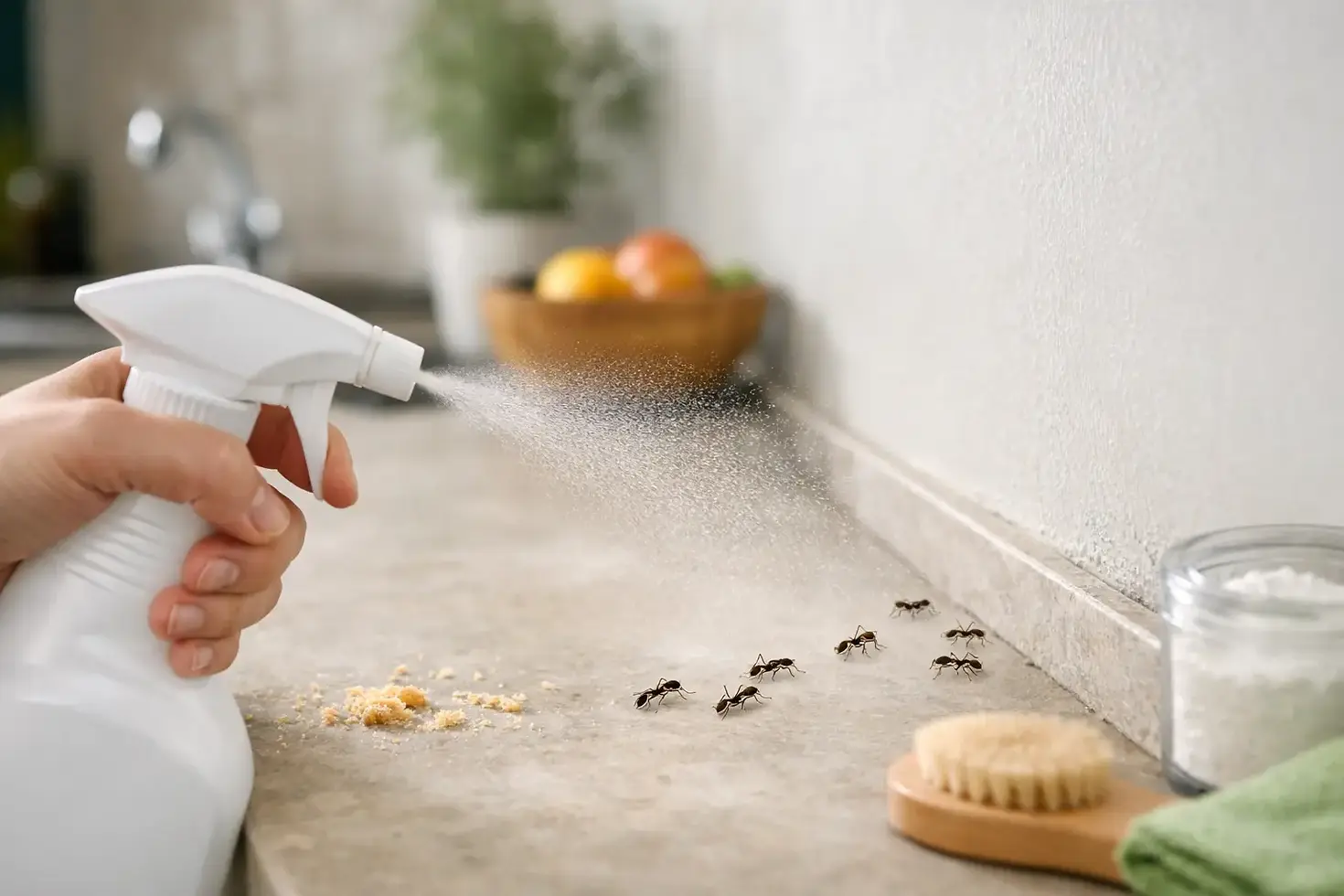
A lot of people respond to ants with the nearest store-bought spray. That may kill the ants you can see, but it does not always reach the colony. In some cases, it can even scatter certain ants and make the problem harder to track.
That is especially true when the infestation keeps returning from the same area. If you spray a trail without removing the food source, sealing the entry point, or treating the colony, new ants may reappear within days. It feels like the product failed, but really the root of the problem was never addressed.
Baits can be more effective than sprays for some ant species because workers carry the material back to the colony. But even baiting depends on placement, ant species, and competing food sources. If the bait is wrong for the species or the area is not prepared properly, results can be limited.
This is one reason recurring ant issues are frustrating for homeowners and property managers. What works on one ant problem may not work on the next one.
Outdoor Conditions Affect Indoor Ant Problems
Indoor prevention starts outside more often than people realize. Ants usually nest outdoors first, then move inside when food, moisture, or weather pushes them there.
Keep mulch and dense ground cover from being piled tight against the foundation. Trim shrubs and tree branches so they do not touch the home. Move firewood, lumber, and debris away from exterior walls. These materials can hold moisture and create sheltered nesting spots close to the structure.
Garbage areas also matter. Use trash cans with tight lids and clean them regularly if residue builds up. If you have recycling indoors, rinse containers before storing them. A sticky soda can in the bin is enough to attract a trail.
In Central Arkansas, weather patterns can play a role too. Heavy rain may drive ants inside temporarily, while hot, dry spells can push them toward indoor water sources. That is why some homes seem to have ant flare-ups seasonally even when housekeeping is not the issue.
When Ants Mean More Than a Minor Nuisance
Not every ant problem is the same. Small kitchen ants are annoying, but carpenter ants raise a different level of concern because they can tunnel through damp or damaged wood. They do not eat wood like termites, but they can still signal a moisture issue that should not be ignored.
If you are seeing larger black ants, hearing faint rustling in walls, or finding sawdust-like material near wood trim or window frames, it is worth having the problem inspected. The same goes for ant activity that keeps showing up despite cleanup and sealing efforts.
For commercial properties, rental homes, and busy households, speed matters. Ants in break rooms, food storage areas, or common areas can quickly turn into a reputation problem as much as a pest problem. In those cases, professional treatment is often the most efficient path because it pairs inspection with targeted treatment and prevention.
The Best Long-Term Plan for How to Prevent Ants Indoors
The most reliable approach is consistent, not dramatic. Keep food sealed, surfaces clean, moisture under control, and entry points closed. Watch for the first signs of activity instead of waiting for a visible trail to build. A quick response early is easier than trying to control a colony once it is established.
If ants keep returning, there is usually a reason. It may be an exterior nest near the foundation, a hidden leak, a species that needs a specific treatment method, or a gap you have not found yet. That is where a professional inspection earns its value. Instead of guessing, you get a clearer answer about what is attracting ants, where they are entering, and what will actually stop the cycle.
For homeowners and businesses dealing with repeat ant problems, working with a local pest professional who understands Arkansas pest pressure can save time and frustration. A good service plan is not just about getting rid of the ants you see today. It is about making the property less inviting tomorrow.
A few ants can feel minor until they become a pattern. The good news is that prevention usually comes down to practical fixes, done consistently, before the problem has room to grow.


