8 Signs of Termite Damage to Watch For
You usually do not see termites first. You notice a door that suddenly sticks, a baseboard that looks a little bubbled, or paint that seems off for no clear reason. That is what makes the early signs of termite damage so easy to miss. By the time the problem looks obvious, termites may have been feeding inside walls, floors, or crawl spaces for months.
In Central Arkansas and South Central Arkansas, that matters more than most property owners would like to think about. Warm weather, moisture, and wood-to-soil contact create the kind of conditions termites like. If you own a home, manage rental property, or run a local business, knowing what to look for can help you catch a problem before repairs get expensive.
Why termite damage is often missed
Termites are quiet, hidden pests. Unlike ants in the kitchen or wasps around the porch, they usually stay out of sight. Subterranean termites, the type most property owners in Arkansas deal with, travel from the soil into a structure and feed from the inside out.
That means surface damage may look small at first, even when there is more activity behind it. A wall can appear mostly normal while the wood underneath has already been weakened. In some cases, people mistake termite issues for water damage, settling, or old-house wear and tear. Sometimes it is one of those things. Sometimes it is termites. That is why small changes around the property deserve a second look.
8 signs of termite damage you should not ignore
1. Wood that sounds hollow
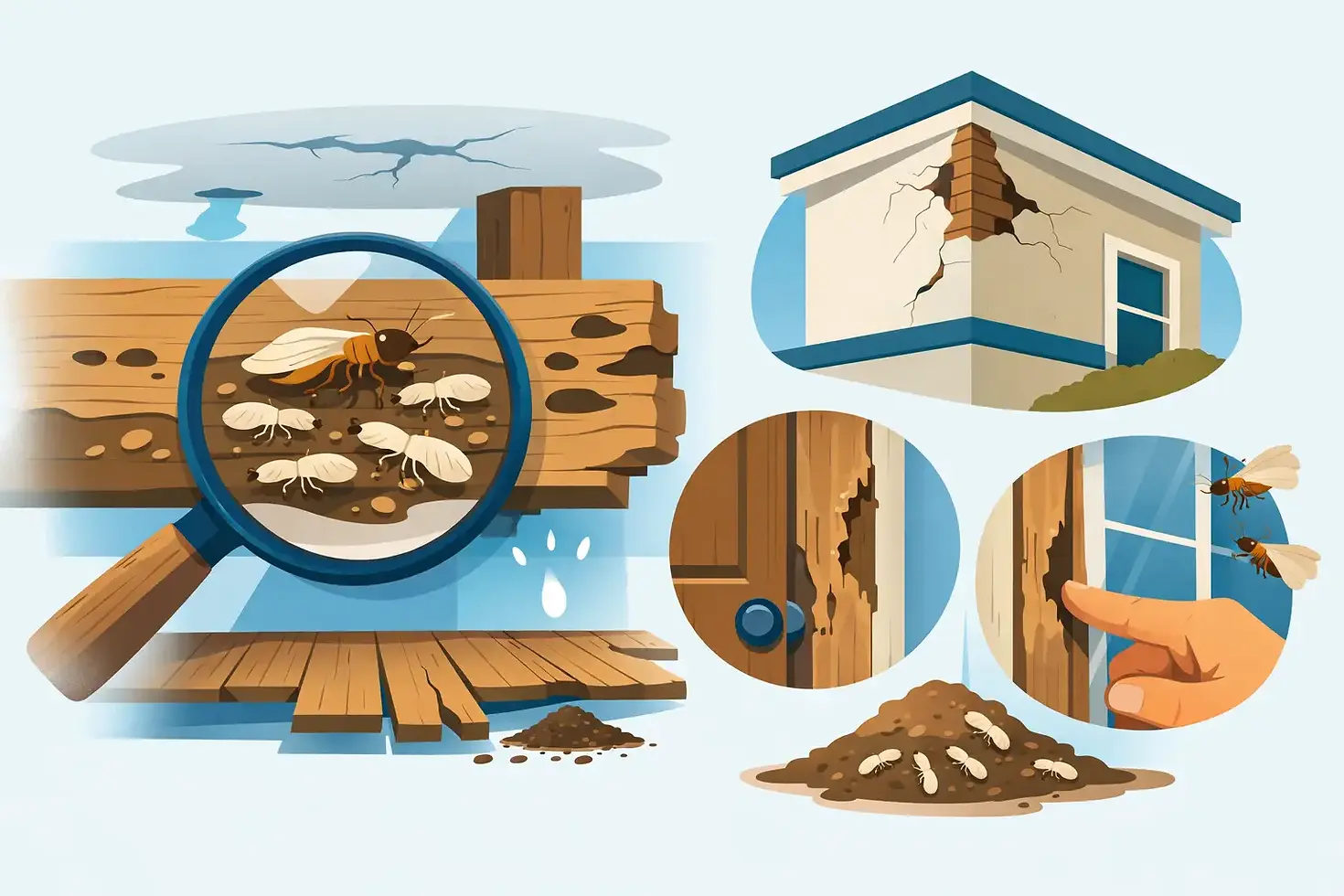
One of the clearest signs of termite damage is wood that sounds hollow when you tap it. Termites eat the inside of wood and often leave a thin outer layer behind. A windowsill, door frame, beam, or trim board may still look intact on the surface but feel weak or papery underneath.
If you press on an area and it gives more than it should, that is worth taking seriously. Wood can also soften from moisture, so hollow or weakened wood does not prove termites by itself. It does mean the structure needs a closer inspection.
2. Bubbling paint or blistered surfaces
Paint that bubbles, peels, or looks uneven can point to excess moisture behind the surface. Since termites need moisture and often create conditions that trap it, damaged walls and trim can sometimes show up this way.
This is one of the easiest warning signs to misread. Plenty of homes in Arkansas deal with humidity-related paint problems. The issue is when bubbling paint shows up along with other clues like soft wood, mud tubes, or doors that no longer fit right.
3. Tight-fitting doors and windows
When a door or window suddenly becomes hard to open, many people assume it is just humidity. Sometimes that is true. But termite feeding can warp wood around frames, and moisture associated with termite activity can cause the same kind of swelling.
If one stubborn door shows up during a stretch of wet weather, that may not mean much. If multiple windows and doors start acting up, especially near other damaged wood, it is smart to have the structure checked.
4. Mud tubes on walls, foundations, or piers
Mud tubes are one of the most recognizable termite warning signs. Subterranean termites build pencil-sized tunnels from soil, saliva, and debris so they can travel while staying protected from open air.
You may spot these tubes along foundation walls, inside crawl spaces, on piers, behind insulation, or where utility lines enter the building. In Arkansas homes with crawl spaces, this is a common place to find activity. If you see mud tubes, do not just knock them down and move on. Active termites may still be inside the structure, and the tubes are telling you they found a path in.
5. Discarded wings near windows or doors
Swarming termites are reproductive termites looking to start new colonies. After they swarm, they shed their wings. Those wings often collect on windowsills, near glass doors, in garages, or around light sources.
People often confuse termite swarmers with flying ants. The difference matters because one points to a nuisance and the other can point to a structural pest issue. If you notice small, same-sized wings piled near an entry point or inside the building, that can be a sign termites are active nearby. A swarm does not always mean your structure is heavily damaged, but it does mean you should not wait around to find out.
6. Sagging floors or loose tiles
As termites feed on subflooring and support wood, the material can begin to lose strength. Floors may feel spongy, uneven, or slightly sunken. Tile can loosen when the material beneath it shifts or weakens.
This kind of damage usually does not happen overnight. It is more often the result of ongoing activity that has gone unnoticed. Of course, subfloor problems can also come from moisture or age, especially in older homes. Still, a floor that suddenly feels different deserves a professional look.
7. Visible mazes or grooves in damaged wood
When damaged wood is opened up, termite galleries often look like long channels or maze-like patterns inside the grain. Unlike some wood-destroying beetles that leave powder behind, subterranean termites typically keep their feeding areas packed with mud or debris.
Most property owners do not discover this until they remove trim, repair drywall, or replace flooring. If you expose wood and see unusual tunneling, that is a strong reason to stop guessing and schedule an inspection.
8. Frass is not typical for subterranean termites, but debris still matters
Many online articles mention termite droppings, also called frass, as a standard warning sign. That applies more often to drywood termites than subterranean termites. In Arkansas, subterranean termites are the bigger concern for most homes and businesses.
So if you do not see neat little piles of pellets, that does not mean you are in the clear. With subterranean termites, mud tubes, damaged wood, moisture issues, and structural changes are often more useful clues than visible droppings.
Where signs of termite damage usually show up first
Most termite activity begins in areas people do not inspect often. Crawl spaces are a big one, especially in homes with moisture problems or poor ventilation. Foundations, sill plates, support posts, porch steps, deck attachments, and garage edges are also common trouble spots.
Inside the structure, termites may show up around baseboards, window trim, door frames, and flooring near exterior walls. In commercial buildings, storage areas, maintenance rooms, and low-traffic spaces can hide damage for longer than you would expect. The pattern is simple - termites go where there is wood, moisture, and limited disturbance.
What makes termite risk higher in Arkansas
Local conditions matter. In Arkansas, warmer temperatures help termite colonies stay active, and wet periods increase moisture around foundations and crawl spaces. Homes with mulch packed against the exterior, wooden siding close to grade, leaking spigots, poor drainage, or untreated wood contact with soil tend to be more vulnerable.
Older homes can carry extra risk because of aging wood, settling, and hidden entry points. Newer homes are not immune, though. Construction type, drainage, and ongoing maintenance all play a role. A clean-looking property can still have termite activity where no one sees it.
When to call for a termite inspection
If you notice one minor issue, you may not be sure whether it is termites or something else. That is normal. The right time to call is when signs start to stack up or when the clue you found directly points to termite activity, like mud tubes or discarded swarmer wings.
A professional inspection can tell you whether the damage is active, old, or unrelated to termites. That distinction matters. Not every damaged board means there is a live colony at work, but waiting too long can turn a small treatment into a larger repair project.
For homeowners and property managers, speed matters because termites do not stay in one neat area. They follow moisture, expand feeding sites, and keep working behind surfaces that still look mostly fine.
Why a professional evaluation is worth it
Termite damage is one of those issues that can look simple from the outside and be much more involved underneath. You might see one bad trim board, while the real problem is below the floor or inside the wall. Or you might assume the worst when the issue is only moisture damage. Either way, guessing usually costs more time.
That is where an experienced local company helps. Bug Pro LLC works with Arkansas property owners who want answers fast, clear treatment options, and protection that lasts beyond a one-time visit. Local experience matters because termite pressure, construction styles, and moisture issues are not the same in every market.
If something about your home or building looks off, trust that instinct. The helpful move is not to panic. It is to get it checked before small signs turn into structural repairs no one wanted to budget for.


