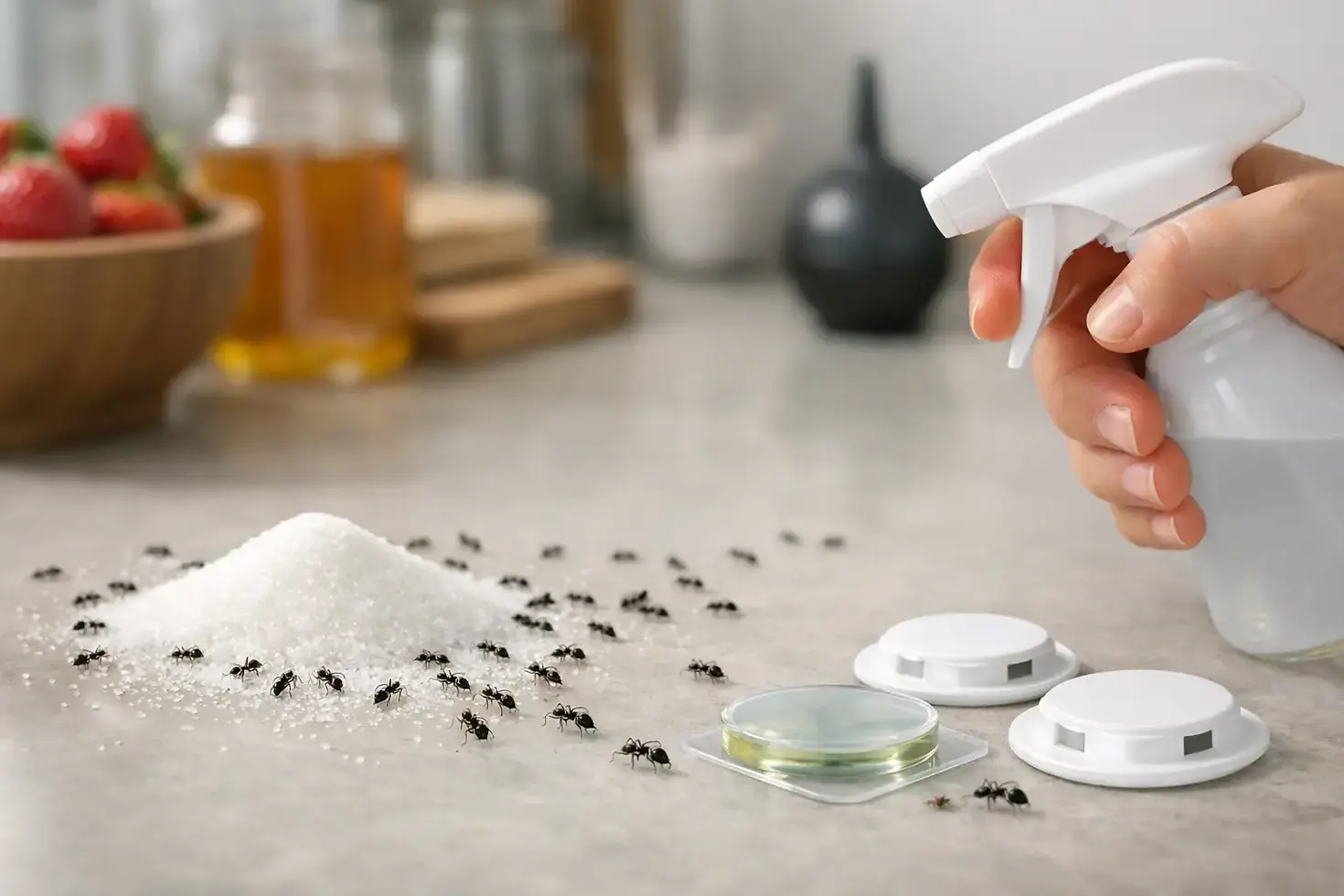
How to Get Rid of Sugar Ants for Good
- 4 days ago
- 6 min read
You wipe the counter, put the snacks away, and somehow there is still a thin line of tiny ants heading straight for the sink. If you are wondering how to get rid of sugar ants, the answer usually is not one big spray treatment. It is a combination of finding what is attracting them, using the right bait, and cutting off the easy access points that let them keep coming back.
Sugar ants are a common name people use for small ants that invade kitchens, bathrooms, break rooms, and anywhere they can find moisture or sweets. In Arkansas, ant activity can ramp up fast when temperatures rise, after heavy rain, or during dry spells that push them indoors looking for water. That is why a problem can seem to appear overnight even in a clean home or business.
How to get rid of sugar ants without making it worse
The first mistake many people make is spraying the trail they can see and calling it done. That may kill a few worker ants, but it often does not solve the colony problem. In some cases, strong repellent sprays can scatter the ants and cause the colony to split, which makes the infestation harder to control.
A better approach starts with observation. Follow the trail as far as you can. Look around windows, baseboards, plumbing lines, door thresholds, and cracks near cabinets. Sugar ants usually enter through very small openings, and the visible trail is only the part of the problem happening out in the open.
Once you know where they are traveling, clean the trail with soapy water or a mild household cleaner. This removes the scent markers that help other ants follow the same path. Cleaning alone will not eliminate the colony, but it can slow traffic and help your next step work better.
Start with food and moisture control
Ants show up where they can eat and drink consistently. Even a few sticky spots can keep them interested. Check the obvious places first, then the less obvious ones people miss.
Wipe up juice, syrup, soda, and grease residue from counters, tables, and floors. Empty crumbs from toasters, under appliances, and inside drawers. Store cereal, pet food, sugar, and snacks in sealed containers if possible. Take out trash regularly and rinse recyclables before leaving them indoors.
Water matters just as much as food. Ants are often drawn to sink areas, dishwasher lines, refrigerator drip pans, and bathroom plumbing. A small leak under a sink can support ant activity for a long time. If the trail keeps returning to the same damp area, moisture may be the bigger issue.
In commercial spaces, break rooms and mop closets are frequent trouble spots. In homes, it is often the kitchen, pantry, laundry room, or bathroom vanity. The exact room matters less than the pattern. If they keep finding food and moisture, they keep recruiting more ants.
The best bait for sugar ants depends on what they want
If you want to know how to get rid of sugar ants effectively, bait is usually the most useful tool. The goal is not just to kill the ants you see. It is to get worker ants to carry the bait back to the nest so it can affect more of the colony.
The trade-off is patience. Baits do not always give instant results. In fact, you may see more ants around the bait at first, which is normal. That can be frustrating, but it often means the bait is doing what it is supposed to do.
Sweet liquid or gel baits often work well for sugar ants, especially when they are clearly feeding on sugary spills or fruit. But ants do not always want the same food. Depending on the season and colony needs, they may shift toward protein or grease. If they ignore one bait type, try another rather than assuming baiting does not work.
Place bait stations near active trails, entry points, and feeding sites, but not directly where routine cleaning will disturb them. Keep bait away from children and pets, and follow all label directions carefully. Avoid spraying insecticide right next to bait placements. If you repel or kill the foragers too quickly, they may not bring the bait back to the colony.
Seal entry points after activity drops
It is tempting to start caulking every crack as soon as you see ants, but timing matters. If ants are actively using an opening and you seal it too early, they may simply shift to another gap and pop up somewhere harder to monitor.
After baiting has reduced activity, inspect common entry areas around windows, door frames, utility penetrations, and foundation cracks. Weatherstripping, caulk, and minor exterior repairs can make a real difference over time. Trim back tree limbs and shrubs that touch the structure, since ants often use them like bridges.
Mulch, stacked firewood, and heavy leaf litter near the foundation can also support ant activity. You do not need a bare yard, but it helps to reduce conditions that let ants nest close to the building and move inside easily.
Why sugar ants keep coming back
Recurring ant problems usually mean one of three things. The colony was never fully addressed, there are multiple colonies nearby, or the conditions that attracted them never changed. Ants are persistent because they are built for it. A small gap, a damp cabinet, or a few drops of sweet residue can be enough to restart the cycle.
Weather plays a role too. In Central Arkansas, rain can flood outdoor nesting areas and drive ants indoors. Hot, dry stretches can do the same when outside moisture becomes scarce. That is why some homes and businesses deal with ants seasonally even when they stay on top of housekeeping.
There is also the issue of misidentification. People often call any tiny kitchen ant a sugar ant, but different species respond differently to treatment. What works for one ant problem may only partly work for another. If the ants keep returning despite cleanup and baiting, the species and nesting pattern may be more complex than it looks.
When DIY works and when to call a pro
A small, recent ant trail in one area may respond well to basic cleanup, baiting, and exclusion. If you catch it early, you may be able to stop the problem before it spreads through multiple rooms or units.
But if ants keep showing up in waves, reappear after every rain, or turn up in several parts of the building, it is time to think beyond store-bought fixes. That is especially true for restaurants, offices, rental properties, and homes where children, pets, or food prep areas make treatment choices more sensitive.
Professional ant control usually starts with identifying the ant type, tracking likely nesting zones, and using products and placement methods that fit the situation. The advantage is not just stronger materials. It is a more complete plan that addresses the colony, the entry routes, and the conditions feeding the problem.
For property owners in places like Little Rock, Cabot, Pine Bluff, and surrounding Arkansas communities, recurring ant activity is rarely just bad luck. It is often a sign that the ants have an established route or nearby nesting site that needs targeted attention. A local pest professional can factor in seasonal pressures and common regional ant behavior instead of relying on a one-size-fits-all approach.
How to get rid of sugar ants and keep them out
Long-term control is about consistency more than intensity. Keep surfaces clean, fix drips quickly, store food in sealed containers, and watch for early trails before they build momentum. Recheck problem areas like window sills, sink cabinets, pet feeding stations, and pantry shelves.
If you use bait, give it time to work and avoid mixing too many products at once. Throwing sprays, powders, and cleaners at the same trail can interfere with the very thing that would have helped. If one approach is not working after a reasonable window, reassess rather than doubling down blindly.
For homes and businesses dealing with repeat ant issues, routine pest service can take the guesswork out of prevention. Bug Pro LLC helps Arkansas property owners handle ant problems with practical treatment plans built for local conditions, not generic advice.
Sugar ants are small, but the frustration they cause is real. A steady, targeted response works better than panic, and the sooner you interrupt their food, water, and travel paths, the easier it is to get your space back.


